

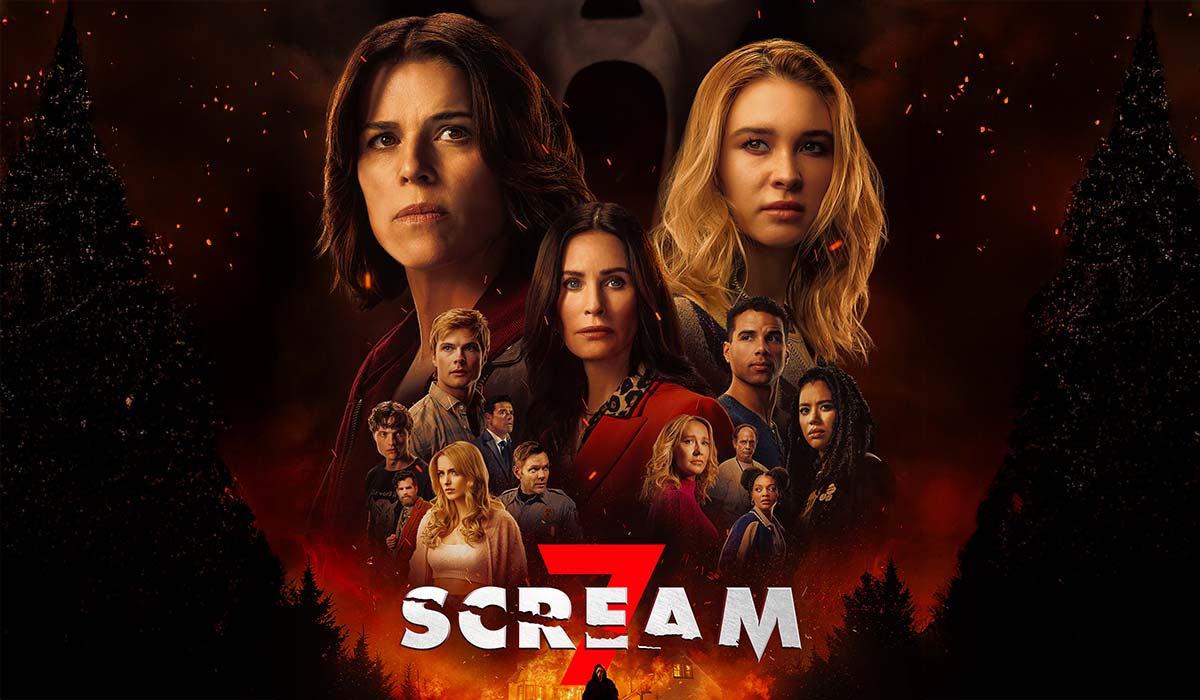
“Do you like scary movies?” This phrase helped define Scream as a clever, self-aware slasher film. It was praised for its meta humor and comedic, yet fascinating, plot. Despite various minor failures the film was still interesting and remained critically acclaimed in its first three subsequent sequels. Yet after thirty years this style and its “meta” humor has begun to stagnate.
Scream 7 begins with the typical Scream formula: a startling, horrific kill to set the tone. The kills in this film set a dark, bloody tone while implying it is going in a new direction, as Ghostface ends the scene burning the Macher house, a primary location in the original film. Despite seeming to reboot the series and phase out most original protagonists in Scream 6, Sidney Prescott returns alongside her newly introduced daughter Tatum.
However this return seemed to make the writers feel the need to remind audiences of the earlier stories through nostalgic references for fans acting as a recap for new audiences. This choice creates a lack of emotional buildup and connection for the new characters while also becoming obnoxious. The indecisiveness of whether to burn old themes or keep reusing them results in a convoluted third act. Various characters are suspected of being the killer before being eliminated; however, the final reveal is nearly impossible to predict and has little significance to the main characters.
Initially Ghostface was a menacing, human killer that causes tension from the implication of his presence. His effect is felt despite much less screen time. In this film the killer seems to have just as much screen time as the protagonists, and it creates a boring, ever-pursuing action villain rather than a foreboding, psychological threat.
The best part of the film came from the cinematography and the kills. Most of the impactful deaths are framed with intense lighting and angles that may leave a mental mark, as characters are burned alive, sliced open, or impaled while hopelessly alone. Yet, this excessive gore comes at the cost of the plot, as the kills become increasingly unrealistic and exaggerated. Though intense, these deaths do not justify the killers or the film’s stretched logic.
In summary, Scream’s most recent entry attempts to restart and redefine the series, but it relies too heavily on the past. Though the film’s acting is primarily carried by returning protagonists, it is a minor piece of the film. Scream 7 dumps an excessive amount of callbacks to recap and insufficiently cater to fans. The kills are excessively gory, and, though they are mostly good, they are increasingly goofy and unrealistic. Though audiences gave the film a positive review online, I believe this is the worst Scream film yet, and it is not for die hard fans. It is evident that modern directors do not understand what made Scream iconic, attempting to do something new while failing to reuse the classic formula. Sadly, I believe the best twist the franchise could offer is retiring the Ghostface mask for good.